
Gamblers gravitate toward Casino Hold’em because it combines the tactical nature of poker with the speed of a table game fortunacazinou.ro. The chances behind that combination are what are important. As soon as you grasp the probabilities, you cease guessing and make calls and folds with a clear reason. This guide explains the fundamental numbers, the house edge, and the changes that can boost your judgment on every hand.
Pre-Flop and Community card Odds You Must Know
Ahead of the cards come out, the chance of receiving a pocket pair is precisely 5.88%, or one time every 17 hands. That is the foundation for hand strength. In contrast to poker against human opponents, you are not attempting to outmaneuver a range. You just require a hand that warrants a call against a blind dealer range. The flop shifts those probabilities fast. Weak pairs can become sets, and high cards can be left hanging.
Having two unpaired hole cards, the chance of matching at least one of them on the flop is approximately 32.4%. That means you fail to hit the flop completely about two-thirds of the time. The high miss rate renders the fold option critical. If you have two unpaired low cards and the flop delivers three overcards, your equity against the dealer’s qualifying range is terrible. Identify these whiffed flops and release the hand. That saves the cost of a double-sized Call bet.
For premium starts, such as a high ace or a big pair, the flop math changes. A pocket pair becomes a set approximately 11.8% of the time, and that hand is nearly locked up against the dealer. Suited connectors look pretty in poker, but they are dangerous in Casino Hold’em. They hinge on implied odds, and this format does not give those. Handle them as speculative hands and release on the flop except if they connect clearly with a pair or a strong draw.
Best Strategy for the Decision to Call Decision
The most significant decision in Casino Hold’em is whether to quit or place the 2x Call bet. The house edge lies in the gap between correct calls and bad ones. The basic rule for experienced players is clear: play with a pair or stronger almost every time. The more difficult spots come with high-card hands and draws that are not made hands. That is where knowing the exact threshold protects your stack.
Play with any hand that has at least a pair, irrespective of the kicker. A pair of twos with a weak kicker still has favorable expectation against the dealer’s varied range. The dealer is unable to qualify about 30% of the time, and a minor pair often claims the Call bet against a unqualified hand or a lower pair. The only real exception is a board that appears threatening, such as four cards to a flush or four to a straight, where the dealer may hold a higher pair or a draw that defeats you.
Handling High Card Hands and Draws
With no pair, the decision gets more complex. You have to consider your high card strength and any draw potential. The most typical profitable no-pair call is two overcards to the board. For illustration, if the flop appears 2-5-9 rainbow and you possess King-Queen, call. Your high cards can beat the dealer’s unqualified hands and even some low pairs when the dealer fails to hit the board. The dealer will hold a pair a good amount, but your high-card equity and the failure to qualify cushion cause the call proper.
Muck when you hold no pair and no draw, especially if your highest card is smaller than the middle card on the board. If the flop is 9-10-Jack and you hold 2-7 offsuit, your likelihood of winning is basically zero. The dealer can qualify with a pair of fours or better, and you have no realistic way to improve past even that low bar. Chasing here is a guaranteed long-term loss. The restraint to fold these hopeless hands differentiates profitable players from players who bleed chips.
- Always Call: Any pair or better, regardless of kicker.
- Call with High Cards: Two overcards to the board (e.g., K-Q on a 2-7-9 board).
- Continue with Strong Draws: Open-ended straight draws or flush draws with at least one overcard.
- Discard Immediately: No pair, no draw, and high card smaller than the board’s second-highest card.
- Marginal Spot: One overcard and a gutshot straight draw; these are almost to break-even and can be folded to lower variance.
The Fundamental Layout of Casino Hold’em and Its Mathematical Foundation
Casino Hold’em is a community card game. You play against the dealer, not other players. You start with an Ante bet, and you can also wager the AA bonus side bet if you desire. You and the dealer each obtain similarweb.com two hole cards, then three community cards appear on the flop. The main mathematical decision occurs right after that flop: either surrender and forfeit the Ante, or match with a bet exactly double the Ante.
This single decision point governs the game’s odds. Traditional Texas Hold’em provides you more betting rounds to feign or extract value on the turn and river. Casino Hold’em doesn’t. If your hand equity against the dealer’s random range is too weak, folding saves money. If it is strong enough, calling locks in your long-term expectation. The house edge calculation depends on how accurately you manage this flop decision.
The dealer requires a pair of fours or better to meet the requirement for the Ante to payout. If the dealer misses, the Call bet is given back as a push, and the Ante gives even money. That qualification rule shapes most of the game’s probabilities. It gives you a small cushion when the dealer fails to hit the board completely, but it also leads to spots where you collect the Call bet while the Ante pushes. That shift modifies the real odds for marginal hands by a large margin.
The Calculations Behind the Dealer’s Qualification
The dealer qualification rule governs all Casino Hold’em odds. The dealer must have a pair of fours or better to qualify. If the dealer does not qualify, the Ante pays 1:1 no matter what you hold, and the Call bet is returned as a push. That rule changes the expected value of marginal hands. listă selectată It establishes a safety net: you can win money with a terrible hand when the dealer misses the board completely.
The dealer misses qualifying about 30% of the time. That cushion is why calling with a small pair works. Even when a bigger pair beats you on qualifying hands, the non-qualifying boards offset those losses. The math gets more interesting with high-card hands. If you hold Ace-high and the dealer misses the board, your Ace-high wins the Ante. If the dealer qualifies with a low pair, your Ace-high loses the Call bet, but the Ante loss is offset by the non-qualification cases.
You also need to factor in the times the dealer qualifies and you still win. If you hold a medium pair and the dealer qualifies with a pair of fours, you win both the Ante and the Call bet. The exact breakeven point for calling with no pair depends heavily on how often the dealer fails to qualify. That is why simulation software and strategy charts are useful. The human brain has trouble handling these overlapping probabilities in real time with total accuracy.
Contrasting Casino Hold’em Odds to Alternative Table Games
Put Casino Hold’em next to other casino staples and the numbers paint a vivid picture. European Roulette has a 2.70% house edge. Blackjack with perfect basic strategy can drop as low as 0.50%. Casino Hold’em is around about 2.16%, so it surpasses roulette mathematically but demands far more than blackjack. Skill is the dividing line. A bad blackjack player may experience a 4% edge, while a bad Casino Hold’em player can easily face 5% or worse.
Three Card Poker features a similar Ante and Play structure, but the house edge on the Ante stands at 3.37%. Casino Hold’em treats a player who masters strategy more gently. The extra community cards give you more information, so the decision is more informed. In Three Card Poker, you decide with limited data. In Casino Hold’em, the flop shows 71% of the final board texture, which provides you with a big information edge over the dealer’s blind hand.
Ultimate Texas Hold’em is the nearest cousin, with a house edge around 2.18% under optimal play. The structural difference is that Ultimate enables you to check and wait for the turn and river before committing the Play bet. Casino Hold’em requires the decision on the flop. That keeps Casino Hold’em faster and more direct. The volatility is somewhat lower because you are unable to trap the dealer with a late raise, but the mathematical expectation is nearly identical for a skilled player.
Practical Bankroll Management Based on Odds
Odds knowledge is useless without a bankroll strategy that respects variance. Even at a 2.16% house edge, short-term swings can be tough. Use at least 100 Ante units for a session to handle the normal ups and downs. If you play $5 Ante bets, a $500 session budget provides room to survive stretches where the dealer qualifies with strong hands again and again. That cushion stops you from tilting or chasing losses with reckless calls.
The AA bonus bet adds a lot of variance. Because its house edge is higher, put no more than 10% of your base unit on it. With a $10 Ante, a $1 bonus bet leaves room for a payout without inflicting too much damage to your expected return. Avoid the urge to raise the bonus after a near-miss. The odds reset every hand, and the cards have no memory. A royal flush is always a 1 in 649,740 hand event based on the seven cards you see, no matter how close you came last round.
Bet sizing should also factor in the pace of play. Casino Hold’em deals about 40 to 50 hands per hour at a full table, and online play runs faster. At 50 hands per hour with a $10 Ante, your theoretical hourly loss with perfect play is around $10.80. That is the cost of entertainment. Hold bets steady and fold correctly, and you extend your time at the table. Doubling the Ante after a bad run ruins the math and drives the expected loss well beyond the normal figure.
Analyzing the House Edge and Return to Player
The typical house edge in Casino Hold’em with optimal strategy is about 2.16% of the Ante bet. That figure is not fixed. It varies with the paytable on the AA bonus side bet and with your own management in folding weak hands. Note that the edge is calculated against the Ante, not the total amount wagered, because the Call bet is flexible and only goes down on hands you determine are profitable.
Return to Player (RTP) is the flip side. For the main game, RTP sits near 97.84% with perfect play. That places Casino Hold’em in a strong spot among table games. It is friendlier than many slot machines but demands more skill than pure luck games like roulette. Every move away from optimal strategy raises the house edge, sometimes by a lot. Chasing weak draws is the easiest way to reduce that theoretical return.
The Impact of the AA Bonus Side Bet
The AA bonus bet is a separate wager that pays based on the value of your two hole cards and the first three community cards. You do not need to beat the dealer to win it. The paytable normally starts at a pair of aces or better, then progresses through flushes and straight flushes up to a royal flush. The house edge on this side bet is much greater than the main game, often between 6% and 8% or more depending on the exact paytable.
Assessing the Risk-Reward of the Bonus
Think of the AA bonus as a volatility play, not a strategic investment. The chance of hitting a payout is fairly low, but the top prizes are massive. A royal flush can pay 100:1. View this bet as a small entertainment cost. If you put 90% of your base unit on the Ante and 10% on the bonus, you protect your bankroll while still allowing space for a large jackpot.
Leveraging Platform Features to Boost Your Hold’em Experience
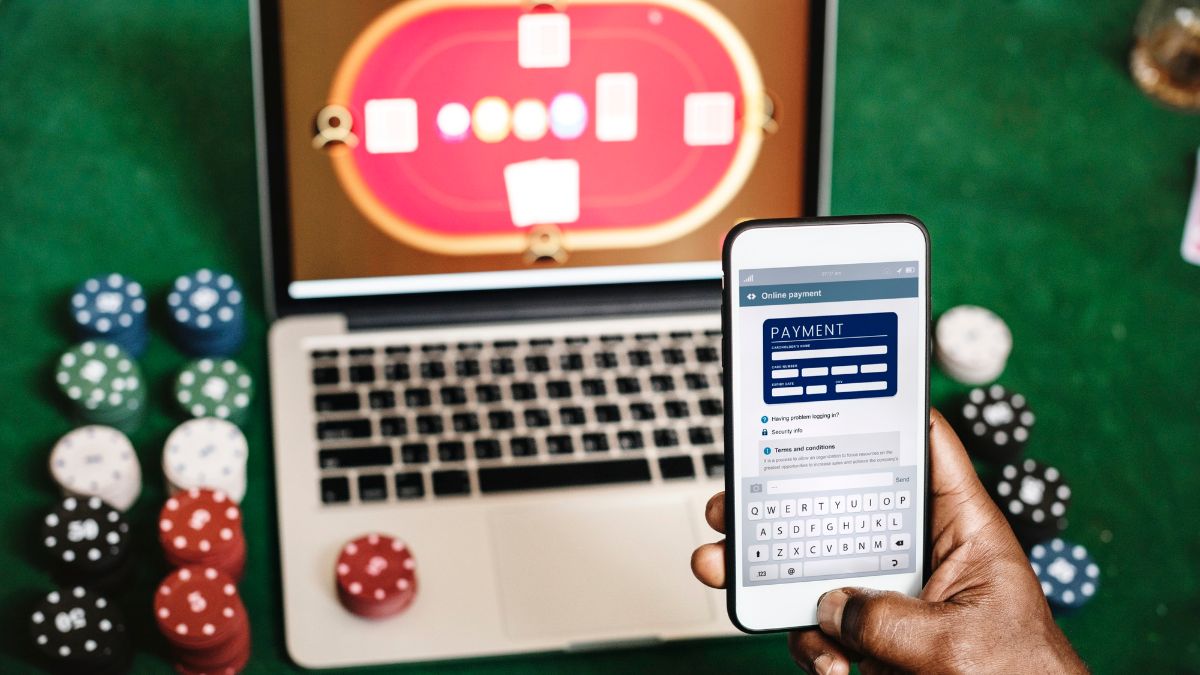
Grasping the odds carries more weight when the playing environment works well. A good platform should run smoothly on desktop and mobile, so you can execute your strategy wherever you are. Immediate play without downloads, clear graphics, and simple tap-to-fold or tap-to-call controls prevent the technical side from interfering with your decisions.
Transaction speed and security are important for the same reason. If your money is stuck in pending withdrawals, you won’t be able to manage your bankroll properly. Look for platforms that complete e-wallet withdrawals within 24 to 48 hours and offer a cashier with cards, bank transfers, and digital payment methods. Knowing your funds are available and protected by strong encryption lets you zero in on the flop texture and the dealer’s qualification probability.
The platform should provide more than one table. A solid library of live dealer games, classic table games, and slots offers you room to move. While you are practicing Casino Hold’em, you may want to try other skill-based games or relax with a few spins. Responsible gaming tools, such as deposit limits and reality checks, ensure your time with the odds balanced and entertaining. The goal is to compete in an environment that respects the math and the player.